July 29, 2012

The Species of Activism

The following is a lecture I gave at the annual "Peace of Mind" conference on behalf of New Hampshire Peace Action in the spring of 2010.

With my online persona, I blog, I make videos, and attend conferences, and do other things.
In real life, I work full time in a factory, I play in a band called “Theodore Treehouse” and serve on the Maine Green Independent Party steering committee. I’m much more boring in real life than my online persona makes me seem. When Will Hopkins asked me to fill this slot for Yael Petretti, I had no idea what I was going to do. He joked that this part of the conference would be changed from “Compassionate Listening” to “How the Punk Patriot is going to save the world.”

I’m not here to tell you how I’m going to save the world though. Not only is that incredibly vain, it’s an absurd thought that one person on their own can save the entire world. But what isn’t absurd is that one person can make a profound difference. You can make a profound difference on a global scale, or you can make a profound difference on a local scale. You can make a difference, and what you choose to do with your life DOES matter.

To do that, I’m going to talk a little bit about where I come from. I’ve always been a political activist. It was an accident. When I was a child, my mother was sort of politically active, and I went with her to political events. I vaguely remember attending meetings at churches and town halls. I remember more vividly walking door to door with her, and watching her talk to people in our neighborhood. I remember it being a problem that people would dispose of toxic fluids down the storm drains. I remember going out with my mother and spray painting stenciled warnings in front of storm drains telling people not to dump their paint or other toxic fluids there.

When I was in middle school, I was living in a rural community in the Bangor area of Maine. Our town council was made up of conservatives to believed that raising taxes was one of the seven deadly sins. They wanted to cut taxes, and cut spending, across the board. Our school was not well funded to start with. We barely had an art program, and our music program consisted of a woman who visited several schools in our general area, wheeling in an electronic keyboard and passing out the lyrics to Abba songs, and she’d have us sing the main melody line while she played keyboard. I don’t remember learning much about music, nor did I feel particularly culturally enriched, but this seemed to satisfy the requirements of the school board, and it was a monthly interruption to math class-- for that reason alone we enjoyed it. Otherwise it was pure torture.
One member of our town council pushed very heavily the idea that the ballooning costs of public education was the cause of all our budgetary woes, that we as a town were going broke, and that we couldn’t afford to keep spending, and sought to cut spending across the board. Because of our Town Council’s proposed budget, our school was facing the reality that it might have to close down for most of the year, or maybe even entirely. A small group of people decided, and rightfully so, that this-- was complete bullshit. The final straw. Behaviour by our town council that was totally unacceptable. For a while there was a lot of vitriol from people on both sides of the fence. Those on the conservative side of the fence agreed that the School was too expensive and that taxes were too high.

The progressive side of the fence decided that education was important, and we shouldn’t neglect our kids, that education was valuable.

This group of like-minded women who knew one another through their kids involvement in Boy Scouts, through after school activities, they got together to do something about this. The town librarian, a handful of concerned mothers, including my mother, got together and started holding meetings to talk about what to do. They held meetings at people’s houses. They held meetings in the public library.

They decided what they’d do, is something radical, crazy even. They would go to the town council meeting, get on the speaker’s list, and COMPLAIN. And they did.

The delinquent kids of my school, whose parents both worked, or came from single parent households, leaving them with nothing to do at home until late at night, they would hang out at the library. They would normally skateboard and commit acts of minor vandalism. They were natural rabble rousers. Our town librarian had to regularly go outside and yell at them. So naturally they become good friends. When our librarian approached them and asked them if they would like to complain to the town council about how much our school sucked, they thought that sounded like a great idea. They even agreed not to cuss in their speeches.

The conservative blowhards on the town council decided that they had heard enough, and began parroting all sorts of stupid conservative talking points. One of them said to one of the mothers who had the floor, “Ma’am, the fact of the matter is, our school is not going to produce any rocket scientists.”

The other mothers organized their kids, and their kids’ friends. We got together to rehearse our speeches. We all went to the next town hall meeting wearing handmade t-shirts that said, “FUTURE ROCKET SCIENTIST.” We each got on the speakers list to talk about how much the school sucked due to underfunding, how important education is to our future, and how a small property tax increase would raise a huge amount of money for the school solving a lot of our funding problems. We asked,

“How often do you hear people rallying and asking you to RAISE their taxes?”

One astute member of the community decided that even more than persuasive emotional arguments, we needed to find out what the facts were. He did not believe it was true that the cost of education was ballooning, and decided to go to the town’s budgetary records held in the library, and look through the budgets for the past 30 years and enter it all into a spreadsheet. He found that expenses across the board were nominally flat, with an average fluctuation of 3 to 4%. But there was a bizarre anomaly: an account that appeared about 10 years prior, that was going up by one hundred thousand dollars every year. It was a reserve fund that the town council could use as a slush fund. And it had accrued about one million dollars over ten years. And this was back in 1990 when a dollar was worth about 40% more than it is today. The town council was taxing the town, and then not spending it on anything, at the expense of the public good.

He had a chart made up graphing the town’s expenditures. He made up a bunch of pamphlets with the same information. And two weeks before the referendum on the budget, he presented at a joint session of the Town Council and School Board. As soon as people realized that they were being lied to, it was an easy sell.

We organized the community, going door to door and explaining how the town council was taxing us and then not spending the money, and how they were lying about the school’s operating costs ballooning out of control. And we had the data to back it up. And my town rejected the town council’s budget by an overwhelming majority. In the next budget, we lobbied for, and won, our tiny property tax increase.

Nobody had to run for office. Nobody had to be impeached. It wasn’t a Democrat of Republican issue. It was just common sense, solid data, and math. It was good citizen ethic. We just did a voter education and a grassroots “Get out the vote” campaign.

We engaged in one of the forgotten parts of citizenship-- we LOBBIED. It’s a dirty word these days. But that’s only because too few of us do it. Too few of YOU do it.
Because of that experience, activism has seemed so natural to me. It’s just something that is part of every day life. Just like we are all supposed to brush our teeth and floss regularly to protect and maintain our dental health, we also need to be politically active on a regular basis so that we can maintain the health our democracy.


***


Let me tell you another story about somebody I know. I don’t actually know him directly, he is a good friend of someone who is, in turn, friend of mine. You may have heard of him. His name is Tim DeChristopher.

Tim DeChristopher was just an economics student living in Salt Lake City Utah. The Bush Administration was auctioning off public land for “energy exploration” aka strip mining. This land was owned by the public, land set aside during Theodore Roosevelt’s time for enjoyment by the public. And this auction and sale of this land was illegal. But the Bush Administration was a criminal government, they didn’t care much about the law, so it was happening anyways.

Tim DeChristopher and his politically aware friends heard about this auction going on. It was right around the corner from where they were already living and going to school. He and his friends decided that they needed to do something to stop it. So they came up with a plan to disrupt the auction.

They were going to go down and storm it, and then scream and yell and try to prevent it from happening. So he and his group of friends went down to the hotel conference room where the auction was happening. Just outside of the doors, his friends chickened out. But Tim decided he had to get in there and at least check it out. He figured he was going to go in, throw a shoe at the auctioneer, and then he’d get arrested, and that would be the end of it. But he’d at least bring some attention to the issue, and maybe delay it for a little bit.

What happened instead is much more interesting. He went through those doors into the area just outside, where he was greeted by a stern man in a suit. At this point, Tim thought to himself, “oh great, they’re not going to let me in.” But the man in the suit said, “Are you here to attend the auction?”
So after pausing just a split second, Tim responded, “why, yes, I am.”
The man in the suit asked him, “And would you like to bid in the auction?”
At this point Tim was thinking. “SCORE! I’m totally getting inside!”
“Why yes I would.”

And so the man in the suit handed him a bidding paddle with the number 70 on it.

So he went into the room, and he sat down in a chair with his paddle, and he began to look around the room. There were all sorts of old white men in business suits, and younger people like Tim, who were talking on cell phones, probably listening to old white men in business suits in offices far away from Salt Lake City.

As the bidding started, and plots of our public, federally protected land were being sold for $4 an acre, Tim decided that there was no reason that he shouldn’t bid too. He had a paddle. He had gotten inside legally. He had every right to be there, and every right to bid as well.

At first his strategy was to drive up the price to ridiculous amounts. And he did. He started bidding like mad until there was just a few other bidders, and driving the price up as high as the other guys were willing to go. Where plots of land were once selling for $4 an acre, they were now selling for $50 an acre, being sold in tracks of thousands of acres at a time.

But then, Tim realized-- it wasn’t enough to stick it to these criminals by driving the prices up. This land was public land, and it belonged to the public, not the coal companies, not mining companies. That land that they were winning, they were still going to strip mine public property. They were still going to ruin the local ecosystem.

So he decided he was going to just grab up all the land he could, and keep it out of the hands of these goons. And so he did. After winning every plot of land from that point forward, somebody from the FBI came over to talk with him, and he was escorted out of the building, and the auction was halted. Tim was charged and sentenced to two years for “bidding without intent to pay.” Which is interesting, because the auction he stopped was itself illegal. But he stopped it.

He and his friends have started an organization called Peaceful Uprising, and have begun organizing climate justice actions around the USA.

***


Another activist you have probably all heard of: Bradley Manning. Bradley Manning was just a Private First Class intelligence officer. He found though, that he had access to damning information about our foreign policy. So he allegedly burned it all to CD-Rs and sent that information off to Wikileaks. A fairly small simple action. But one with huge, sweeping consequences.
Rosa Parks famously decided one day that she was sick of being treated like a second class citizen. So she decided she just wasn’t going to take shit from anybody anymore, and in a simple act of noncompliance that anybody could have done, she simply refused to move to the back of the bus. She also decided to dedicate her life to organizing, boycotting, striking, and mobilizing her community.

Cindy Sheehan, attending a Veterans For Peace conference in Texas, realized that she was just a few miles away from George W Bush’s ranch. So she and a few others decided that they were going to camp out on his front lawn and wait to ask the president, “For what noble cause did my son die?” The media took notice, and she became a hero. But she’s just a person like you.

Tim DeChristopher, Bradley Manning, Rosa Parks, Cindy Sheehan, are not that different than my School Librarian, my mother, or any of you.

The only difference between the people in the stories I’ve told you, and anybody else you know is the following:

1) These “heroes” found themselves in a position where they could do something to make the world a better place. It came with a certain amount of risk to themselves. But, and this is the most important part
2) They did it anyways.

They are not super-heroes. They are not Saints. They are just regular people like you and me. They got more press than most, but the DNA of what spurred them to action, the essence of what drove them to act, is no different.

This sounds too simple. It’s almost boring. So let me call it by something that sounds far more fancy: Leadership.

Why did they behave the way they did?
What if they had waited around for the Obama, or the Nader, or hero politician of their time to fight all their battles for them?
What if Rosa Parks had waited around for somebody else to be Rosa Parks?
What if Bradley Manning had waited for somebody else to be Bradley Manning?
What if Cindy Sheehan had waited around for somebody else to be Cindy Sheehan?
What if Gandhi had waited around for somebody else to be Gandhi?
What if Martin Luther King Jr had waited for somebody else to be Martin Luther King Jr?
What if Tim DeChristopher had been like his friends, and chickened out at the front steps?

Why did these people take action instead of waiting for some politician to do things for them? Why did they decide that THEY should be the ones to make a difference, instead of waiting around for some activist hero to do it for them?

One word: Leadership.

What does it mean to be an activist?


I think to be an activist, a real activist, is to be a leader. A sovereign individual. When you decide that you are in charge of your own life, that you have a role to play in shaping the world around you, that your life has value and importance, that things like justice and truth are important, when you invest your hope in yourself and your community, instead of investing it in politicians and activist heroes, you are a leader. And the best kind of leader is the kind of leader that inspires people who are not presently leaders to BECOME leaders.

Leadership is something we desperately need in this world.
Activism is something we desperately need in the world. We need people who are able to not only diagnose our societies ills, but who are willing to treat them.

The Species of Activism


These are the medicines we have at our disposal:
Lifestyle Activism
Theater activism
Education
Electoral Activism
Lobbying
Direct Action


One thing that I’m frustrated by, is that people often get into arguments about which one of these types of activism is the right one. This is an incorrect way to think about activism. Each of these has limitations, and each has benefits.

Lifestyle activism: It’s the kind of activism preferred by folks who feel totally ignorant about politics, and as a result totally disenfranchised from our systems of power. Buying organic food, wearing sweatshop free clothes, and eating a vegan diet are all noble things to do. Changing your diet to include more local food is also a noble thing. But some people don’t have that luxury. For instance, you cannot buy romaine lettuce in the bronx. In some parts of Chicago, you cannot buy a carrot. Your grocery store is 7-11. People living there don’t have the luxury of eating a vegan diet. They eat what they have available to them, which is a lot of dinty moore beef stew and fast food.
Riding your bike instead of taking your car will save you money, but 3/4ths of the US’s greenhouse gases come from processing and burning coal and other fossil fuels for electricity. More than half of that electricity goes to private industry-- factories, and even... power plants. For instance, Nuclear Power requires the consumption of electricity, which comes from burning coal. Riding your bike will save you money. But it won’t change this.
What lifestyle activism can do is start important conversations about issue that you care about. It also allows you to be an example for others to follow.

Theater activism: This is the form of activism that we are all probably most familiar with. We go to protests, we hold signs, we give speeches, we chant chants, we get into the media. The term “theater activism” makes it sound like it’s phony. It’s not. It’s an important tool in the tool box. Now theater activism is not unimportant. Theater activism raises awareness about your issue. It builds momentum. It brings people together into one place so you can do education, and organize them for education or electoral work later down the road.

Education: This can be as simple as having casual conversations with the people you know, or it can be as concerted an effort as going door to door to every home in your neighborhood and having a thousand conversations. It can be standing on a street corner and handing out pamphlets. It can be making YouTube videos. It can be updating your facebook status. I’m sure you can think of plenty more examples.

Electoral activism is another important tool in the toolbox. There are a lot of people who think that electoral activism is the be-all end all of activism. These people are usually partisan jerks who think everybody needs to vote Democrat, even if the Democrat is just as crooked as the Republican. I think that these people are wrong, but that’s another issue. Cindy Sheehan engaged in electoral activism when she ran as a Green Party candidate against Nancy Pelosi. Many of us wanted, and still want, to see George W Bush and Dick Cheney stand trial for war crimes. Nancy Pelosi refused to move forward on impeachment proceedings, and continued to vote to authorize funding for the wars in Iraq and Afghanistan. Cindy Sheehan wanted to call her out as a two-faced phony. So she ran against Nancy Pelosi in 2006. Ralph Nader was sick of seeing Democrats move further and further aligned with Corporate interests, and more and more against human interests, which is why he ran for President in 1996, 2000, 2004, and 2008.

Lobbying:
Once you get your candidates into office, you have to hold them accountable. Or maybe there are people in office who disagree with you, and you want to change their mind. You can do this through lobbying them. Which is basically just another way of saying, “talking to them.”
I’ve lobbied for a few bills in the Maine State House, not as a hired representative of any organization, but as a concerned citizen. People think that if you go to lobby your representative, that they won’t bother listening to you. I’ve found the complete opposite to be true. Elected representatives, in my experience, are desperate to hear from people who aren’t paid to have a point of view. If you make an effort to speak your mind to your elected officials, whether at a committee hearing, or in a one on one meeting in their office, you will be heard.
(talk about IRV bill experience)

Direct Action:
Lastly, Direct Action is a form of activism that comes to mind when people say “activism.” Occupations, sit-ins, etc. In terms of escalation, it’s the last peaceful method of protest. In it’s most broad definition, it’s when you do something that directly prevents something from happening. It might be Matthis Chiroux laying down in the middle of the street outside Fort Hood to stop the buses carrying troops to be deployed. It might be members of environmental groups camping out in the tops of trees in old growth forest. It might be the activists at the WTO meeting in Seattle in 1999, forming human chains, blocking entrances and intersections, shutting down the WTO convention. It might be activists occupying the SEC building this October, or occupying Wall Street this month on the 17th. Or it could be as small as stepping between two people who are fighting and breaking it up.

All of these are options for you as you set out to tackle problems you come across.
So if being a leader means being an activist, what does it mean to be an activist? It means that you are in control of your own life. That you are participating in systems of power. That you have taken control of your own destiny. That governing is something done by you, not to you.
I would just ask you all to join me in a saying something that for me, has carried me through times of doubt and struggle. “We have a duty to fight. We have a duty to win. We must love and protect one another. We have nothing to lose but our fear.”

July 26, 2012

Keystone XL didn't die, it just changed names


DONATE: ‪http://bit.ly/7OwKc2‬
BLOG: ‪http://punkpatriot.blogspot.com‬
FACEBOOK: ‪http://bit.ly/1OtiqI‬
TWITTER: ‪http://www.twitter.com/punkpatriot‬
STORE: ‪http://punkpatriot.etsy.com‬

Why I'm a Democratic Socialist

The stories we tell ourselves are all essentially just lies that we tell ourselves so that we distract ourselves from noticing how shitty and meaningless our lives are.

I know that coming from me, a white male living in a 1st world nation, that sounds like I'm just being ignorant or bitchy about not having everything handed to me, but it's totally not the case.

I'm just recognizing what can only be described as a fact. Life is shitty. To be alive, no matter WHERE you live, is to suffer.

So let's get ethnocentric for a moment-- Here in the United States of America, we've got this narrative that we tell ourselves. That if you just work hard, do the right things, and you'll get ahead.

We go to school and school sucks, but we're told that we're supposed to endure being bored while being fed lies about Europeans who got lost and “discovered” places where people were already living, told a bunch of dates from history that have absolutely no meaning or relevance to our tiny myopic 10 year old universe, having dodgeballs hurled at our heads in gym class-- and with all of it done in shifts, like at a factory, which was designed to mentally prepare us for a life of working in all those factories that left the country 30 years ago. For our tests, we regurgitate answers without understanding them, and we accept things our teachers tell us without thinking about them. And we call that “learning.”

And it sucks, but we endure it all. In fact, we work really hard at doing well at this thing that sucks, because if we do well at this thing that sucks, it opens up this chain of possibilities for other things that suck, but supposedly lead to better things (but which in reality, also suck). If we do well in school, we're supposed to be able to get into a good university, and then we stress out and work really hard going to that university because if we do well, we supposed to be able to get a good job. And then you get a job, and you work really hard no matter how much you hate it, in the hopes of moving ahead in your career, so that eventually you'll get to a point in your life where your body is giving out, and your organs are failing, you can do all those fun things that you wanted to do in life.

But it's all a load of bullshit. We are constantly deferring our happiness today for this abstract happiness in the future which never materializes. And it's not going to either.

Well, I mean it could work out for you that you get your story book ending where you live happily ever after, but more likely than not, it's not going to work out that way. You're just going to keep suffering through the shit in front of you today, and then at the end, you just die, and it's all shit. It's just one long line of continuous shit from birth till death. Rather than getting ahead, you spend every day giving it your all just trying to keep what little you have, and then you're even losing ground, day after day, no matter how hard you work.

That procession of success we're all told to believe in is complete and utter bullshit. Some people have the right skills or the right connections and happen to be in the right spot at the right time and get lucky, but most people don't.

Some people don't go to college, walk into a street while drunk, get hit by a car, and end up with a huge settlement, and then invest it in something that makes them rich. Some people just happen to be born to the right parents. Some people just happen to be born to the wrong parents. There's just no fucking rhyme or reason to anything, and it's foolish to assume that anything in life is going to resemble ANYTHING like fairness.

Some people are able to amass huge amounts of wealth for no goddamned reason, and most people end up with little or nothing. That's how we currently organize our society. And part of that too, is that's just how life works-- some people get rewarded for doing the totally wrong thing, and some people get punished for doing everything right. Being successful in life seems to be a lot like winning the lottery-- it's just random chance, and it's totally out of your control.

Unless you happen to be born to the right parents, the parents of successful capitalists, and then you can use your money to do all your work for you. Then you can hire people to do other things for you. You can even hire people to do your hiring for you. You also get buy politicians, politicians who will change the laws to make it easier for you to do whatever the fuck you want to.

While there is abundance which can only be described as insane for a small few, that wealth is gathered by force from everybody else. And that is where poverty comes from.

So if we're living on a planet where odds are, you just happen to be born to the wrong parents, you know, parents with brown skin who live in a place without clean drinking water, how can we say, “well, there's some winners who profit from being born to rich people who use money to buy force to control natural resources and fuck other people over, and that's totally fine with me” and then call ourselves moral, or ethical?

If you subscribe to the theory that we live in a cold and uncaring universe, and that life on the planet earth is as fragile and meaningless as mold in a bathtub, you quickly realize that the world is filled with suffering FOR NO GODDAMNED REASON, and the very least that we can do is reduce the total amount of suffering on the planet by evening things out a little bit.

And that's why I'm a Democratic Socialist.

July 24, 2012

Are you a Green? Why?

The number one problem that Greens face is that people don't know who we are, or what we stand for. To fix that problem I've set up a tumblr account to which anybody can submit their reason why:

Here are my favorites so far:


Go ahead and submit your own!

July 22, 2012

SHOCKING : CALIFORNIA COPS OPEN FIRE ON MEN - WOMEN - CHILDREN - BABIES


SHARE THIS VIDEO
FAIR USE

Cops shot non-lethal rounds toward men, women and children and unleashed a dog who charged toward a stroller during a clash with mostly Latino residents in Anaheim following an officer-involved shooting there.

July 20, 2012

Jello Biafra: Insurrection on all fronts

Do I see eye to eye with Jello, or does he see eye to eye with me?

The Democratic Party is irredeemable and unreformable

Cynthia Dill's run for US senate is a prime example


If you run into people who think that running as a Democrat is a good way to seek reform at the national level, tell them to follow this race in Maine: Cynthia Dill for US Senate.

The DSCC (Democratic Party Senate Coordinated Campaign) doesn't even mention Cynthia Ann Dill or that she won the primary of the Maine Democratic Party in their write up about the race.

Instead the DSCC chooses to talk about how the corporate-funded independent with ties to clearcutting... is an "Obama supporter."

Well first, I'm not an Obama supporter, because I don't support incinerating women and children with drone strikes, and I don't support the executive branch having the authority to assassinate people, or keeping a "Kill List."

But let's just put that aside for a second.

This just goes to show how completely corrupt the DNC is. Why is that the case? Why are they backing a corrupt, millionaire independent over a politically progressive woman that their own Party nominated through the democratic process?

Well, I would say that they are concerned with winning, but that's not true. If that were the case, they'd be dumping DSCC money into Dill's race, which they are not. And besides, the past 20 years show that they have made a pretty successful career out of chronically losing -- losing on the agenda front, losing on the congressional seats front...

Could it have something to do with the fact that Dill states that she is opposed to PACs and supports amending the Constitution to eliminate corporate personhood? (Thereby pulling billions of dollars out of the industry that is politics.) I think you'd be on the right track there. They are not concerned with policy. They are not concerned with the well being of the average American. They scapegoat the republicans, and willingly step aside on key issues that they should be digging their heels in on.

I have a theory that because Cynthia Dill is a real progressive, is opposed to the NeoLiberal agenda of Bush and Obama, that the DNC is pulling the rug out from under her because she would show how corrupt the DNC is. She would potentially be a thorn in their side. This is what I learned the hard way back in 2007 working on Dennis Kucinich's presidential campaign. As Howard Beale said in the film Network, "I have seen the face of God."

Since then I have Registered Green, haven't looked back since. If Cynthia Dill were to have registered Green, we might not have had a giant political machine to push behind her with, but she'd at least have the formal backing of the party that she is registered with at a National Level.

The DNC is beholden to corporate money, wall street, the war machine, and that's it. They are irredeemable, unreformable, and corrupt beyond repair. Your time would be better served walking away from them, and building an alternative.

Colin Beavan, aka "No Impact Man"


Colin Beavan is running as a Green in New Yorks 8th congressional district in Brooklyn!

Jill Stein on CurrentTV's "War Room" with Jennifer Granholm


JillStein.org

July 16, 2012

Talking Points on Welfare: parts 1-4

Part 1


So after my last video on How to Fix the USA’s Economy, I saw a lot of ignorant comments in the comments section about WELFARE.

They weren’t NEW ignorant comments, they were the SAME ignorant comments that you hear over and over. Apparently nobody out there is challenging people on their declarations, and allowing the virus of ignorance to spread.

So I wanted to make a list of facts and talking points for progressives when confronted with these conservative... well, let’s call them what they are-- they’re LIES, and stop the spread of ignorance in it’s tracks.

So let’s go down the list, and tackle them one by one, shall we?

1) Welfare spending is the reason our government is in debt.
FALSE.

If you had the choice between giving somebody a dollar and getting back either $1.50 or $0.80, which would you choose? Hold that thought.

According to USGovernmentspending.com The Federal Government is committed by law to spending 557 billion on welfare in the year 2010. Which seems like “Oh my! That’s a lot of money!” Which, for one person, yeah it is. But for our federal government, not so much.

Especially when you compare that to the $895 billion we’re committed to spend, by law on Defense spending. Which doesn’t account for the $711 billion in our discretionary spending on stuff like the War in Iraq and Afghanistan, and useless cold war-era weapons that we don’t even use, and never will.

Next you have to take into account what we get for those dollars spent.
Most economists agree on the following figures, including conservative ones:
Welfare spending has a fiscal multiplier of about 1.5-- while military spending has a fiscal multiplier of 0.8.

To which you might say, “wow, you just said some numbers, but what the hell does that mean? It means that for every dollar our gov’t spends on welfare, we get one dollar and fifty cents back in the form of GDP. With military spending, for every dollar we spend, we get back $0.80.

That seems really stupid. And that’s because it is. Which is why politicians frame their arguments about or disgustingly wasteful military spending as being “patriotic” or “supporting the troops.”
How much support actually goes to our troops? You, know, like after they come back from getting shot at and having their legs blown off?

According to the White House’s own figures, we’re slated to spend $125 billion on veterans affairs. And we all know about staffing shortages and underfunding that goes on in our VA system. So clearly this isn’t about supporting our troops.
For those who don’t care about human lives, and only the hard economics, I want to ask you again: If you had the choice between giving somebody a dollar and getting back either $1.50 or $0.80, which would you choose?
Now for the humanitarians out there, if you had to choose between giving somebody a dollar to feed their family, knowing you’d get back $1.50, or give somebody $1 knowing that your next door neighbor would have his legs blown off and you’ll only get back $0.80, which would you choose?


Part 2


Talking Points and facts on Welfare part 2:
"I was denied welfare because I’m white."

The largest population of welfare recipients, by race, is white. So that’s clearly false.

You were denied welfare because conservatives like you threw a hissy fit back in the 1990s, because you thought it was too easy to get on welfare, and that too many people were getting on it. Now that you’ve applied for it, you’ve seen hard to get on it, and rather than admit to your own mistake, now you’re playing the race card.
Typical...


Part 3


People on welfare are mostly black teenage mothers:

FALSE: This is a fiction created by assholes like Newt Gingrich to get poor white people to get angry at poor black people, so that poor people in general would spend our time fighting against one another, instead of coming together and fighting against rich assholes like Newt Gingrich.
According to our gov’ts figures, white people receive the largest amount of welfare by race, making up nearly 40% of the welfare recipient population. 43% of welfare recipients with children have only one child, 30% have two, 15% have three, and there’s a real sharp drop-off after that.
Of those who are on welfare, and are mothers, 47% are between the ages 20-29. 32% are between the ages of 30-39. Only 7% of welfare recipients who have children are teenagers.

So sorry. The most common welfare recipient is white, between 20-40 years old, and has two kids or less.

Part 4


"Taxation is theft, why should I have my pay stolen to pay for a free ride for other people?"

This one is going to take a while to unpack. It requires some knowlege of recent economic history, which is going to mean explaining. I hope I don't bore you.

In 1960, the average household worked half as many hours. Adjusted for inflation, the Cost of Living was a third of what it is today. Yet, the average household income for a person in the lower 85% of income brackets, in terms of real dollars, has remained stagnant for the past 40 years.

That’s right, 85% of the population has seen their cost of living triple, has had to double their hours they spend working, and as a reward for working twice as much have LESS expendable income than we did 40 years ago.
To recap really quickly- [drawings] the dollar cost of living has tripled, but the actual stuff we’re getting for that cost isn’t three times better. We’re still buying pretty much the same houses and the same wonderbread and the same Jif peanut butter as we did 40 years ago.
So we’re paying three times as much today for the same things we had in the 1960s.
The Average American household had one income earner working 40 hrs a week in 1960, and that was enough to maintain a comfortable standard of living.
For twice as much labor today, 85% of Americans still have an income gap of a third. That money has to come from somewhere. Some households have two adults working 80 hours a week, and still struggle to make ends meet.
For 85% of Americans, we’ve been slowly eased into a starvation diet over the past 40 years.
That income gap, for many people, who thought that going on welfare was irresponsible, had to borrow their wages. Where did they borrow their wages from? From the wealth they already had. We’ve borrowed against our houses, and we’ve used credit cards to fill our income gap. We were told that this was the responsible thing to do. The fiscal reality of it, is that we’ve been cannibalizing ourselves.
If you look at this through another lense, by indexing things to the value of labor-- the value of the labor you produce has been devalued by two thirds. You have essentially been getting paid a third of what your labor is actually worth. That income gap of a third should rightfully be paid by our employers. And where has all that money gone?
Check Wall Street. While the value of our labor has been cut to a third of what it was, the value of labor of the average CEO has skyrocketed, from just 30 times the lowest paid employee at their company to 300 times the lowest paid employee.
So while the 85% of Americans who work our asses off just to get by, we’ve seen the value of our labor be devalued, fraudulently, by 300%. We’ve seen the value of labor of CEOs increase, fraudulently, by 1000%. What are they doing differently that they need to be compensated at 1000% more than they were back in the 1960s? Well, there’s a short answer and a long answer:
The short answer: Nothing.
The Long answer: Absolutely NOTHING whatsoever, at all.
Now, who has been deciding what everybody’s labor is worth? The invisible hand of the market? Bullshit. It’s been those CEOs. Of course they are going to give themselves raises and reduce the value of our labor by 2/3rds. They’re greedy, shortsighted people. You would probably do the same. Right? No, actually you probably wouldn’t, because that would be THEFT, and THEFT is wrong.

So let’s get back to our initial conservative talking point: Why should you allow somebody else to get a free ride from your labor? You shouldn’t. Which is why we need a maximum wage.
Is taxation really theft? Well, if you’re taxing that top 15% of people who have increased the value of their own labor and decreased the value of everybody else’s labor, we’re not stealing from them by taxing them to pay for welfare. The lower 85% earned that income, but were not paid that income.
The *real* problem is that those richest 15% aren’t PAYING what the 85% is earning by their labor leaving an income gap. How the hell are people supposed to fill that gap through working more if their labor just keeps getting further and further devalued?
With welfare. Welfare is just the lower 85% of people getting what their labor earned them.
If we don’t reverse this trend of the rich getting richer, and the poor getting poorer, eventually there will be no way for the lower 85% of Americans to feed themselves by our own labor.
At which point, we will be forced to kill the top 15% and eat THEM.


One source: http://20somethingfinance.com/american-hours-worked-productivity-vacation/

Another one I didn't specifically use, but has a lot of the same info as a presentation given at the Commenwealth Club of California two years ago, by an economist whose name I can't remember:
http://sociology.ucsc.edu/whorulesamerica/power/wealth.html

July 11, 2012

David Cobb, 2004 Green Party Candidate for President and cofounder of Move to Amend.


Lauren (Blue Hair) challenges the NYPD to a rap battle


This is exactly the creative, nonviolent, provocative shit that I love to see.

Labor Abuse in the USA: Third World America

via WBUR's On Point:


We’ll look at forced labor in America. From a fish factory in Louisiana to the national picture.


The story out of Breaux Bridge, Louisiana sounded Third World. Guest workers in a seafood processing plant allegedly forced to work 24-hour shifts. 80-hour weeks. Barricaded in so they couldn’t escape. Threatened with beatings to work faster. Bullied. Underpaid. Families threatened. Forced labor.

Last month, Wal-Mart suspended the supplier of crawfish, and the horror stories ricocheted around the country. But in a bad economy, with the pressure on, exploited labor doesn’t just happen on the bayou.

This hour, On Point: On the bottom rung. Exploited labor in America.

-Tom Ashbrook

July 10, 2012

Anarchopanda

this is incredibly awesome


Via Wired Magazine:
He’s an anarchist-pacifist, he told me after our chance meeting, but he calls himself Anarchopanda. You can find tributes from his fans on Facebook and a handful of videos of him on YouTube, hugging the riot cops dispatched to suppress the spontaneous marches that have surfaced every night since the bill’s passage.

[Film] There's No Tomorrow

great film about why we are currently at peak everything

...and why Capitalism needs to end NOW.

July 5, 2012

The Punk Patriot interviews Lee Camp


Lee Camp's stuff: http://LeeCamp.net
His interview with me: http://leecamp.net/2012/07/podcast-146-asher-platts-sits-down-with-me-to-talk-occupy-his-race-for-the-senate/

SUPPORT THIS BLOG/SHOW/VLOG/WHATEVER: ‪http://bit.ly/7OwKc2‬
BLOG: ‪http://punkpatriot.com‬
FACEBOOK: ‪http://bit.ly/1OtiqI‬
TWITTER: ‪http://www.twitter.com/punkpatriot‬
STORE: ‪http://punkpatriot.etsy.com‬

What do you do when the cops attack?

Stand up... spray back?


I was pepper sprayed for being near peaceful protesters in DC. Being pepper sprayed fucking hurts like hell.


Congrats to the Kiev police force, you've now been trained in how much pepper spray sucks. You get a gold star. And pains in your lungs for several days. And pain every time you take a shower, for like a week.

Also, looks like the Ukrainians have invented a new RevGame: Cop Surfing

July 4, 2012

Stupid Math Tricks

My friends on facebook have been passing around this stupid math trick:


A lot of the math here is slight of hand. I'm working it out right now on the back of an envelope.

You can reduce the equation to (250(80a+1)+2b-250)/2=x

The "+1" is cancelled out after you multiply by 250, when you subtract 250 at the end (250*1=250). So you can just eliminate both of those.

Then you have 250(80a)+2b

Using 111's as your numbers and isolating the parts of the equation you can see the sort of effect that they have.

So if a=111 and b=1111 you can see the following:
250(80*111) = 2,220,000 Or twice the first three digits in your phone number.

When you "+2b", you just get twice the last four digits in your phone number.

When you then divide all those numbers in half, you get your phone number. It's a roundabout way of just entering your phone number into a calculator and then being surprised that you got your phone number.

You're welcome.

July 3, 2012

Protesters at #NatGat Kettled

Lee Camp's interview with me on the Moment of Clarity Podcast

LeeCamp.net


I have an interview with him as well, which I am hoping to get up soon. I've been having trouble with the files becoming corrupted either while editing, or while exporting the files from my editor, so I have had to start over from scratch a bunch of times.

June 30, 2012

Unicorns Fart Rainbows and Capitalism Sucks.


I make awesome memes. You should donate $5 just for the shit like this that I do.

Let's create a cooperative economy!

Think Capitalism is awesome? You're probably thinking of "markets" which are a different thing. Here's why capitalism sucks:

June 25, 2012

Campaign Signs as Dialogue, Not Marketing

I'm actually on a bus on my way to NYC for the world premier of American Autumn right now. But this is a video I filmed a while ago and just had a speck of free time to edit and upload it:


DONATE: ‪http://bit.ly/7OwKc2‬
BLOG: ‪http://punkpatriot.blogspot.com‬
FACEBOOK: ‪http://bit.ly/1OtiqI‬
TWITTER: ‪http://www.twitter.com/punkpatriot‬
STORE: ‪http://punkpatriot.etsy.com‬

Primary Election Day!


I won! But I was also the only candidate in the Primary race. On to the general election!

Asherplatts.com

How many ______ could your debt buy? Student Debt in Perspective

This is an amazing visualization tool from The Young Invincibles.

click it


h/t to my dear friend Ingrid.

June 24, 2012

Ze Frank: Occupy Wall Street and the hero archtype

via Ze Frank

Police Brutality: it's not a race issue, it's an impunity problem

via retired police officer Larry Hohol


Media contacts and more information:: http://www.worsethanrodneyking.com
Actual state police dashcam video and audio of recent brutal Pennsylvania State Police beating of shackled detainee. Other than not stopping when directed, this incident involved no serious traffic violations and was simply the low speed following of a car that would not pull over.
For more on this story and for media inquiries visit: http://www.worsethanrodneyking.com

Norman Finkelstein on "What Gandhi said on Nonviolence, Resistance, and Courage


via democracyNow!

After an exhaustive study of Mahatma Gandhi’s works, scholar and activist Norman Finkelstein has written a new book about the principles of nonviolent resistance from the Indian struggle for independence to Tahrir Square and Zuccotti Park. He says Gandhi found "nothing more despicable than cowardice," and argued that nonviolence does not mean running away from danger. In fact, Gandhi argued that fighting a war with weapons takes less courage than nonviolent resistance in which "you’re supposed to march into the line of fire, smilingly and cheerfully, and get yourself blown to bits." Finkelstein’s new book is titled What Gandhi Says: About Nonviolence, Resistance and Courage. Click here to see part 1 and part 2 of this interview.

AMY GOODMAN: This is Democracy Now!, democracynow.org, The War and Peace Report. I’m Amy Goodman, joined by Norman Finkelstein, scholar, activist, author. He has just published two books. One, Knowing Too Much: Why the American Jewish Romance with Israel Is Coming to an End. His other is called What Gandhi Says: About Nonviolence, Resistance and Courage. What does Gandhi say, Norm Finkelstein?

NORMAN FINKELSTEIN: Well, I think the first point is, very few people read Gandhi. They just assume: Gandhi, simple person, simple dresser, skinny, nonviolence, it’s obvious what it means—when, in fact, it’s not obvious at all what nonviolence means for Gandhi. His collected works come—you’ll be surprised, I think, to learn they come to 98 volumes. And that’s about 500 pages per volume. When I first started checking out the works at NYU Library, New York University Library—and NYU is a prominent research library—I think you’ll be surprised also to learn, even though they acquired the collection in 1984, apart from one volume, I was the first person who ever checked out any volume of Gandhi’s 98-volume collected works. I went through about half, 47 volumes, about 25,000 pages.

I was curious to know, what did Gandhi mean by nonviolence, because, you know, on reflection, it’s not so obvious. And the first thing to say about it is Gandhi was not the kind of nonviolent pacifist that, for example, was depicted in Sir Richard Attenborough’s film on Gandhi. Gandhi valued nonviolence, no question about it. But he attached equal value, and in some places you could say more value, to courage. Not just nonviolence, but courage. And he found nothing more despicable than cowardice. It wasn’t violence that, for Gandhi, was the most repellent of human instincts; it was cowardice.

AMY GOODMAN: I want to read a quote, that you quote in What Gandhi Says. Gandhi says, quote, "My nonviolence does not admit of running away from danger and leaving dear ones unprotected. Between violence and cowardly flight, I can only prefer violence to cowardice. I can no more preach nonviolence to a coward than I can tempt a blind man to enjoy healthy scenes. Nonviolence is the summit of bravery. And in my own experience, I have had no difficulty in demonstrating to men trained in the school of violence the superiority of nonviolence. As a coward, which I was for years, I harboured violence. I began to prize nonviolence only when I began to shed cowardice." Norm Finkelstein?

NORMAN FINKELSTEIN: Well, you know, it’s a—first of all, it’s a great quote, and there are many quotes like that in Gandhi. And it’s hard sometimes for a person to understand the logic, because a lot of people on the left, they take nonviolence to be sort of wimpish, and they want violence because it’s more, you know, macho and so on and so forth. But Gandhi comes along, and he says, "I think nonviolence takes more courage than violence." So, at the beginning, when I read that, I thought he was just saying it for rhetorical effect. But then, when you read what he actually means, it’s actually sensible. He says, if you believe in violence, and say there’s a war, your enemy, your opposite, has a weapon, and you have your weapon. So, at any rate, yes, you’re risking your life, but you have something to protect yourself: your weapon. And you may survive the encounter. But Gandhi says, "Nonviolence means you’re supposed to march into the line of fire" — and now I’m quoting him — "you’re supposed to march in the line of fire, smilingly and cheerfully, and get yourself blown to bits." That’s what nonviolence means for Gandhi. You’re supposed to get yourself blown to bits. During the nonviolent activities known—the various campaigns, he would say to his followers, "Don’t be a coward and go to jail, because you’re afraid to get killed. Don’t use jail as a pretext to get away from getting killed. You better" — and I’m quoting him — "You better get your skulls cracked. Otherwise, I don’t want to hear from you." So, the irony is, even though Gandhi is attacked by people on the left for being wimpish, the fact is, he set such a high standard. I couldn’t meet it. I mean, I have to be honest about those things. I wish maybe, if I’m thrust into circumstances like that, I’ll find the courage to do it. But sitting here, no, I couldn’t honestly—I couldn’t honestly say I can meet that standard.

I’ll give you an example. A couple of days ago, a friend of mine, my webmaster, Sana Kassem, she sent me a video of a fellow, an American Jew, protesting in the Occupied Territories. And every time the Israelis fire the tear gas, he’s of course running in the opposite direction. Of course. And it’s being filmed. And I’m thinking to myself, but Gandhi says he’s supposed to march—go right into it. And you’re supposed to get killed.

AMY GOODMAN: But, I mean, he was very strategic. He wanted to achieve an end. He didn’t want just to have people killed. He—most importantly was to accomplish what he was driving for: Indian independence.

NORMAN FINKELSTEIN: Yeah, well, India independence. But we have to be clear about Gandhi. Sometimes he’s reduced to India independence. But no, he had a whole program of Hindu-Muslim unity, about—and he led many campaigns. I mean, it was news for me also. I’m not pretending as if it’s common knowledge. But Gandhi was very careful. He would only take on public campaigns where, he said, the public already recognized the wrong.

So let’s take one example. In the 1930s, he led a major campaign against alcoholism, which was a big problem in India. And people said, "But Mr. Gandhi, why do you focus on alcoholism? There are many other problems. We have a problem with people who are addicted to racetrack betting. And they’re addicted to the cinema," which, you know, Gandhi thought was a sin. So he said, "Why do you choose" — excuse me — "Why do you choose to focus on alcoholism?" And Gandhi’s answer was very straightforward. He said, "Because Indians already recognize alcoholism is a problem. But they don’t recognize that racetrack betting or the cinema is a problem." And then he said, "It’s wasting time." Gandhi always said, "I’m a man of action. I want to get things done." And so, he wants to start with where public opinion is at. You see, for Gandhi, politics was not about bringing enlightenment to the masses. No, that’s sort of like the Marxist tradition: "We’re the vanguard. We know the science, the science of Marxism" — or in my day, the science of Marxism-Leninism. "We have the science, and we have to bring enlightenment to the benighted masses who suffer from false consciousness and all sorts of other, you know, maladies." Gandhi is not that.

Gandhi is sort of like the Occupy movement. Yes, he’s very much like the Occupy movement, because the Occupy movement started from where people were already at. The Occupy movement comes up with a slogan: "We are the 99 percent." The basic point being, 1 percent are hoarding it all, and 99 percent are getting nothing. And it immediately struck a responsive chord with Americans because that’s how we already felt. They started—what made the slogan so successful is they tapped into a sentiment that was already there. They started from where the consciousness of the American people already was. Nobody had to educate us that the system was unfair. It had been rolling before our eyes for the last several years, or more. And so, what made their movement so successful was, I think, the Gandhian tactic: they found the perfect slogan that embodied the consciousness of the American people at that moment. If they had gone a little further in their slogan, they may have lost the people. And that, I think, was a real—for me, it was a real insight in Gandhi that politics is not about enlightening people. Politics, for Gandhi, to use an expression, is to quicken the conscience of the public to get them to act on what they already know is wrong.

And actually, it worked in my own case. You know, personally, I’m a person of the left, have always been, and always railing against the capitalist system, the unfairness of the distribution of wealth and so forth. When I started to hear about these folks in Zuccotti Park, it resonated for me. But then I heard they’re camping there. I said, "All right, Norm, you’re heading toward 60. You’re not going to Woodstock. You’re past your prime. This is not for you." And so, I just was an observer, a sympathetic observer, but an observer. And then, when I heard about—I’m from Brooklyn, New York, and I heard 800 people were arrested on the Brooklyn Bridge. I said, "OK, Norm, it’s time to do something." Now, nobody had to tell me the system was wrong. What people had to do was quicken my conscience to act. And that’s what Gandhian nonviolence is all about, getting people to make the kinds of personal sacrifices which will force the bystanders to say, "OK, I really have to do something now. If they do it, why aren’t I doing it?" And that’s what Gandhianism was about.

But also, as I said, you have to enter a thousand caveats, qualifications, about his commitment to nonviolence, because it was not nonviolence that for him was the ultimate sin. Actually, I’ve read through about half of his—as I said, half of his collected works. He uses—I know it’s a paradox—he uses the most violent language, not against those who commit violence. Actually, he says he was an admirer of Sparta, because he admired the courage of the warrior. And he always used military metaphors. It was "the army of the nonviolent." He was "the general." He always used martial metaphors. But he said—as I said, he reserved his most violent language for cowards. He literally says they don’t deserve to live. A coward does not have a right to live.

There is where he gets—you know, Gandhi was very strict about nonviolence. He had to be nonviolent in thought, word and deed. But you could say he sort of verges on violence—violent language, thought and word when it comes to cowards. And I have to say also, probably in his classification, I would rate a coward. I mean, I’m not proud to say that. But he had such a high standard of what political commitment was about and the sacrifices you were obliged to make, if you want to be morally consistent with your values, it’s a tough act.

AMY GOODMAN: A thumbnail sketch of who Gandhi was, since you’ve studied him. For people who, as you said, have a very sort of scant—a sort of caricature of who he is, explain where he was born, why he came to adopt the views he did.

NORMAN FINKELSTEIN: Well, I’ll tell you—I mean, I’d like to always be honest. I didn’t look too closely at the biographical data. I mean, I know as much as, you might say, a Wikipedia entry might say. I was more interested in the theory. I was interested—I began the whole project because I said to myself, well, you know, India under Gandhi—under Gandhi’s influence, it faced the same sort of challenges as Israel-Palestine. First of all, Gandhi wanted to end an occupation, like the Palestinians. Second of all, Gandhi was confronting the great power of his day, the superpower of his day, namely the British Empire. Similarly, the Palestinians have to face a formidable regional power, namely Israel, and right behind it, the superpower of our day, namely the United States. And thirdly, the Palestinians don’t really have a military option. The only way they’re going to succeed is if they try these tactics that Gandhi pioneered in India. And so, I felt, for those three reasons—trying to end an occupation, facing a superpower, and the only tactical option is really nonviolence—it would be interesting to see, OK, how did Gandhi reason the whole thing through? And that was my impetus. I don’t know the history better than sort of a generalist, or, for that matter, Gandhi’s personal biography.

He was a—you know, there were—many things about Gandhi were very eccentric and also very autocratic. You know, Gandhi was, "you do it my way, or go the highway." He was very, very autocratic. And he said that what he decides to do is not based on reason. Reason comes later. It’s what his inner voice tells him to do. Well, obviously you can’t rationally argue with an inner voice. Either you agree, or you don’t agree and you leave. I did have a good opportunity when I was in South Africa a couple of years ago. I went to see his granddaughter, Ela Gandhi. And I remember her saying to me, and it just came out in conversation, she said he had great confidence in that inner voice, which is—you know, nowadays we would say—we would call it, he had good political instincts. But you can’t argue with an instinct. Instinct tells you, "Do this at this moment." But you can’t really argue with it. And so, it was very hard. You know, reading him, there’s that streak of autocratic—that autocratic streak, which is very unpleasant.

On the other hand—and, you know, I sort of get emotional—you can’t but admire that man. I mean, the kind of moral force he had, it was just terrifying at the end, in '47, you know, Egypt—excuse me, Israel—ah, India erupts in this horrible bloodletting, the Partition. They estimate like a million people were killed. You go into streets of Calcutta, literally 10,000 bodies in the street. All the blood is literally flowing in the streets. And Gandhi comes in, and the first thing he does is he goes to the Hindu temples. Now remember, this is where the intercommunal hatred has reached a fever pitch. And he goes into the Hindu temples, and he insists, "I'm going to begin each religious—each service, prayer service—I’m going to begin it with a passage from the Koran." The Hindus were going mad. "What do you mean, the Koran?" And he is adamant. "I am beginning with the Koran." And there would be the hecklers and the people who were worse than hecklers. He would stay with them in the temple the whole night. He said, "I’m going to sit and reason it through with you why I’m beginning with the Koran." And when he went on the hunger strikes during the terrible bloodletting, you know, to his credit—you can take it away—they stopped. OK, it’s true they stopped killing each other temporarily. You can even say they stopped briefly. But for the Mahatma, for Gandhiji, they stopped. You know, that’s—it’s very impressive. Of course, the downside is, that kind of moral power came and went with Gandhi. There was nobody else commanding that kind of moral authority. But it was a very impressive show. It really was. And it gets me a little bit angry when people on the left, who I like, you know, and they’re very harsh on Gandhi. No, there were a lot of problems, no question about it. But there, there went a man.

AMY GOODMAN: Author, scholar, activist, Norman Finkelstein. He has just written the book, out this week, What Gandhi Says: About Nonviolence, Resistance and Courage.

GUEST
Norman Finkelstein, author and scholar. He has two books out this week: Knowing Too Much: Why the American Jewish Romance with Israel Is Coming to an End and What Gandhi Says: About Nonviolence, Resistance and Courage.

June 22, 2012

Sandra Nurse's Interview (Part II) on Occupy Theory Radio

WBAI hosts the interview here:http://archive.wbai.org/files/mp3/wbai_120620_183216owsr.mp3


This is a short blog post, but an AMAZING interview. I can't actually host the player on my blog here, so just click the image of the player above, and it will take you to WBAI's website.

The Sky Is Pink: New Short Film by GASLAND's Josh Fox


When will people wake up and start voting for the Green Party? Throw the bums out! It's Republicans and Democrats alike greasing their palms while these industries kill us.

June 19, 2012

A list of warmongering assholes who you should Vote AGAINST this November:

Is your Senator on the list? The War Machine amazingly bipartisan.

Charles Schumer (D-NY)
Susan Collins (R-ME)
Benjamin Cardin (D-MD)
Johnny Isakson (R-GA)
Richard Blumenthal (D-CT)
Kelly Ayotte (R-NH)
Joseph Lieberman (I-CT)
James Risch (R-ID)
Ron Wyden(D-OR)
David Vitter (R-LA)
Frank Lautenberg (D-NJ)
Jerry Moran (R-KS)
Mark Pryor (D-AR)
John Cornyn (R-TX)
Robert Casey Jr. (D-PA)
John Boozman (R-AR)
Kirsten Gillibrand (D-NY)
Jeff Sessions (R-AL)
Sherrod Brown (D-OH)
Scott Brown (R-MA)
Debbie Stabenow (D-MI)
Mike Crapo(R-ID)
Amy Klobuchar (D-MN)
John Hoeven (R-ND)
Jeff Merkeley (D-OR)
Daniel Coats (R-IN)
Christopher Coons (D-DE)
Lisa Murkowski (R-AK)
Ben Nelson (D-NE)
Patrick Toomey (R-PA)
Michael Bennet (D-CO)
Mike Lee(R-UT)
Daniel Inouye (D-HI)
Rob Portman (R-OH)
Barbara Mikulski (D-MD)
Dean Heller (R-NV)
Jon Tester (D-MT)
Kay Hagan (D-NC)
Bill Nelson ‎(D-FL)
Mark Warner (D-VA)
Carl Levin (D-MI)
Mark Begich (D-AK)

All signed a letter to Obama criticizing him for negotiations saying, "we urge you to reevaluate the utility of further talks at this time and instead focus on significantly increasing the pressure on the Iranian government through sanctions and making clear that a credible military option exists."

American Autumn Trailer #2

I spent October-January working on this film.
I spent my entire life waiting for this movement to reach this sort of momentum.

Hope to see you at the World Premier on June 26th at Indie Screen in Brooklyn!

June 15, 2012

I don't support Gary Johnson. And here's why:


Paul Robeson School Walkout

via OccupyTVNY.org


On May 1, 2012, nearly 100 students walked out of Paul Robeson HS in Crown Heights, Brooklyn in solidarity with Occupy Wall Street's call for #MayDay and in protest of the DOE's policies at their school. They were joined by students at several other schools when they held a teach-in with community leaders at nearby Fort Greene Park.

This summer, public education advocates and recent graduates from the school are launching the Paul Robeson Freedom School: PaulRobesonFreedomSchool.org

June 14, 2012

American Autumn World Premiere & Party

(this is that film I was working on with Dennis Trainor Jr)

*Tuesday, June 26th, 7PM at Indie Screen

*directions*

*Tickets are FREE!*

Friends:
Nine months after the start of the Occupy movement, I am proud to share
with you a feature length documentary American Autumn: an
occudoc.


The June 26th Premiere party is co-sponsored by a growing list of partners
that currently includes Occupy.com, The World Can’t Wait, Amped Status.com
and Revolution Books.

The event is FREE and open to the public.

American Autumn: an occudoc features and original score by Goldi & Mike
Lawrence Yanicelli & additional music provided by OWS Rebel Music Group,
Fugazi, Goldishack Guerrillas, & Larissa and the Rain Doggs.

RSVP via the facebook event page (and share this link w. friends)
https://www.facebook.com/events/383559275025108/ , or by emailing me
directly.

The World Premiere will take place at Indie Screen,
a spacious cinema/lounge in Williamsburg, Brooklyn
(directions)
on Tuesday, June 26th @ 7PM.

June 10, 2012

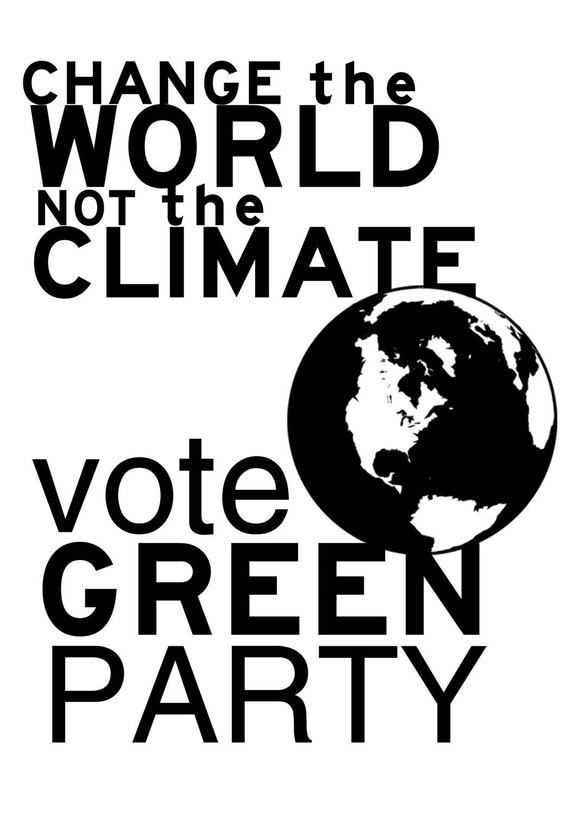
Change the World; Not the Climate: Vote Green


Printed on a cotton shirt, (specify your size in the order) made in the USA!
By Union workers!
Even the cotton is grown in the USA.
So awesome!
And at a price like this for all that value, you can't afford NOT to get one!

Click it:

Voting Green Is Sexy!


Voting Green IS Sexy!

I've not yet made physical copies of the shirts, but they'll look a lot like this if you order one.

Printed on Kelly Green, Union Made, USA grown and fabricated cloth! You can't get a shirt better than this! And inexpensive too! Holy cow, you can't afford NOT to get one!

Click it:

June 2, 2012

"99 Airlines", or "Why MoveOn Sucks"

Because nothing says, "proletariat" like flying an airplane


MoveOn has a glaringly blind eye towards Obama.

Obama, whose plutocratic, power-grabbing, constitution violating presidency (new boss, same as the old boss), is a large part of why we're protesting to start with. While I'm confident that this movement isn't going to get sidelined with presidential politicking for wall street's puppets, and this just goes to show that MoveOn is potentially a worse enemy than FoxNews.

At least with FoxNews, we KNOW they're against us. MoveOn is the worst kind of enemy, the kind who smiles and compliments you while they smother you in your sleep.

Sure, Mitt Romney and his allies have millions of dollars. But Obama has the same allies on Wall Street. And they're also giving Obama millions of dollars. And is wasting money on airplane banners really "making sure our dollars go far?" Just... WTF MoveOn?

Dear MoveOn.org. Please try this: Instead of trying to make this into an anti-Romney, or anti-Republican thing (which Occupy has never been), why not make this an "anti-money" thing? Pressure Obama to run as a clean elections candidate? Pressure congress to create a Clean Elections system modeled after the one in Maine? Why not take a firm stance against corporate contributions and the use of SuperPACs by ANY candidate? Until then, you're just hacks for the Democratic party, who turn a blind eye to the DNC doing the same things you are berating the GOP for doing.
via an email from MoveOn.org:
99airlines is off the ground, and we need ideas for airplane banners to fly over high-profile Mitt Romney events. Rate, submit, and share an idea today.

Submit Your IdeaDear MoveOn member,
We just launched 99airlines, our program to fly airplane banners over high-profile Mitt Romney events with messages from the 99%.
And what's the coolest part? You get to decide what the banners say! If you could fly a message over Mitt Romney's head, what would it be?
Will you suggest a short, pithy, memorable phrase for a 99airlines banner? Or check out and rate other people's ideas?
Click here to submit or vote for a 99airlines banner.
Imagine if Mitt Romney and his Super PAC friends had to deal with the sights and sounds of airplanes following them everywhere, reminding Americans how Romney stands for corporations and the 1%. Reporters at the events will film and write about the banners—it'll drive Romney and his corporate backers crazy.
That's why we're taking it to Romney, exposing him as Mr. 1%. Here's the banner we flew over a Romney fundraiser in Boston last week.

We're ready to fly a whole lot more over his high-profile appearances this summer, including fundraisers and a major event with Latino political leaders.
We need you to submit your ideas today. And the highest-rated, most shared, and most timely messages from the 99% will get flown over Romney's head. So get your ideas online today!
Click here to submit or vote for a 99airlines banner.
MoveOn members stepped up and funded 99airlines as a way to combat the Super PAC ads and corporate money that will flood into this year's election. We're transforming Mitt Romney's 1% fundraising tour into an airborne progressive message machine that will be seen by the people at the events and the media covering them.
They've got millions of dollars, but we've got more people and more creativity than they can muster. If you submit your ideas—-and make sure as many people as possible rate and contribute ideas—99airlines can define Mitt Romney and the people he represents in a visible, memorable way.
Click here to submit or vote for a 99airlines banner.
Thanks for all you do.
–Garlin, Elena, Emily, Victoria, and the rest of the team
Want to support our work? We're entirely funded by our 7 million members—no corporate contributions, no big checks from CEOs. And our tiny staff ensures that small contributions go a long way. Chip in here.
PAID FOR BY MOVEON.ORG POLITICAL ACTION, http://pol.moveon.org/. Not authorized by any candidate or candidate's committee. This email was sent to andrew pollack on June 1, 2012. To change your email address or update your contact info, click here. To remove yourself from this list, click here.

Occupy Minneapolis Stepping It UP!

via the Minneapolis Star Tribune


A protest over the foreclosure of a house in south Minneapolis has escalated into a nightly confrontation with police and created a political dilemma for city leaders, who loathe taking part in foreclosures but say they have to keep the peace.
Fifteen activists with the Occupy movement were arrested Wednesday after repeated episodes over the past week in which the city has tossed out protesters and boarded up the house, only to see the demonstrators peel back the boards and use chains, concrete-filled barrels and other obstacles to make it more difficult to carry them away.
The protesters say they're acting on behalf of David Cruz and his family, but neither he nor his family has lived in the residence at 4044 Cedar Av. S. for two months. After a foreclosure sale last year, the property belongs to Freddie Mac, the federally owned mortgage giant, which says no one has made a mortgage payment since July 2010.
Freddie Mac owns 59,000 foreclosed homes and has encountered protests before but, according to spokesman Brad German, this one stands out.
"What is unusual, in fact to our experience utterly unprecedented, is the level of aggression and defiance of the law by these activists," German said.
Gathering outside City Hall on Thursday, those activists say they will back at the house at 2 p.m. Friday, inviting another confrontation.
"We're using public resources to defend big banks and very little to keep people in their homes," said Anthony Newby, an organizer with Occupy Homes.
"They should know [that] if we haven't gone yet, we are never going to go," yelled activist Cat Salonek, who was among those arrested Wednesday.
Court records show that David Cruz-Sanchez got a $194,000 mortgage to buy the house in July 2007. Activists say the Cruzes became delinquent in 2010 because of an online bank glitch related to automatic mortgage payments. Newby said the family asked PNC Bank, the original lender, if the balance could be paid in increments -- but PNC said no.
German, the Freddie Mac spokesman, countered that PNC Bank attempted to reach the Cruzes several times in 2010 and 2011 to discuss a loan modification. He said they never responded.
The home was sold back to the lender at a sheriff's foreclosure auction in August 2011. Under the law, the Cruzes were allowed to stay in the house during the redemption period, which expired in February. In April, a Hennepin County judge ordered the eviction of the family, although the Cruzes had already moved out.
Yet Occupy protesters, who have fended off other foreclosures in the city, moved in.

Neighbor losing sleep
Next-door neighbor Margaret Kowalke, 63, said the singing and chanting and other noise from the protests interfere with her sleep.
"I do want this whole situation to end because it's wreaking havoc on my health," she said.
Kowalke said she called the police on Wednesday about noon when she saw protesters taking the boards off the back door. She called the police again during the night when she woke to the sounds of people trying to break in again.
Kowalke said that, while she understood the plight of the family, she didn't comprehend why protesters had to keep reoccupying the house.
"I think they're taking it too far," Kowalke said.
After Hennepin County sheriff's deputies arrested five people last week while carrying out the court order, three City Council members expressed sympathy with the Occupy protesters.
Then the protest became the province of Minneapolis police, and put council members and Mayor R.T. Rybak in a difficult situation.
City proclamations are only adding to the confusion: The city issued a statement Tuesday night that City Attorney Susan Segal had, at Rybak's direction, "reached out to [owner of the house] Freddie Mac to say that the city is not in the foreclosure business."
Activists took that to mean police would ease up on the arrests, which was proved erroneous on Wednesday night, when Chief Tim Dolan oversaw an operation carried out by about 20 officers.
"Mayor Rybak has said that they're not in the foreclosure business," activist Nick Espinosa said. "And that the house now is Freddie Mac's problem. But twice yesterday they evicted the house. Fifteen people were arrested in total. When is it going to stop?"
The mayor's spokesman, John Stiles, said Rybak wants Freddie Mac to renegotiate with the family and take physical care of securing the property. He added that the city has to respond to 911 calls from residents.
"We don't want to be involved in civil issues between property owners and tenants," Stiles said. "But if there's criminal trespass on a property, we're under obligation to respond."
Council Member Gary Schiff called the situation "unsustainable." Police and the city attorney's office should act when there is concern for the personal safety of neighbors, drivers or the security guards, he said.
"But shy of that, I don't think we should be involved," Schiff said, adding it should be up to the banks to secure their private property.
German said Freddie Mac is now securing the property with the intent to evaluate it and put it on the market. That process could take as long as two months, and selling it could take up to four.


24 Mai - Casseroles